Advertisements

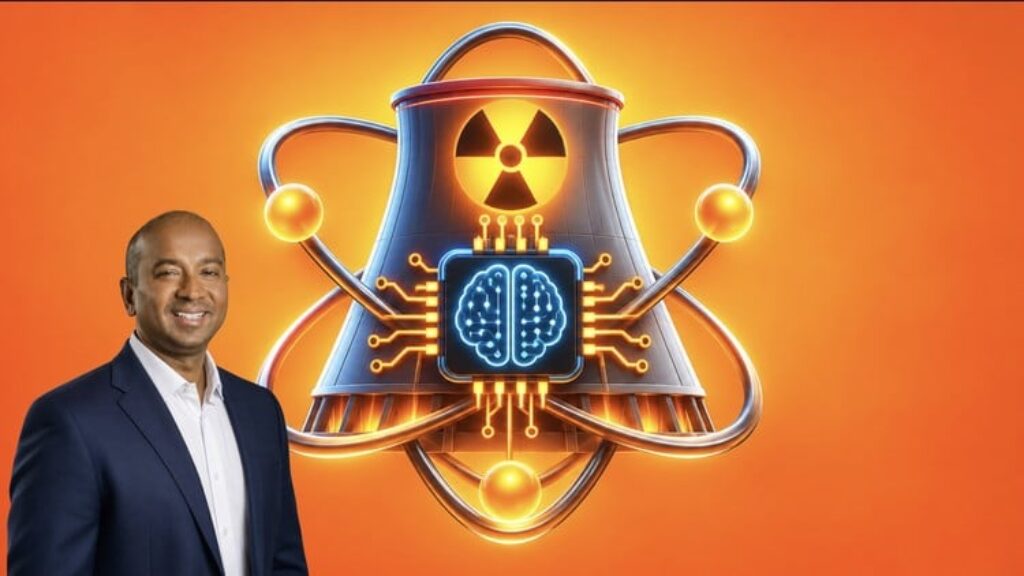
Nuclear Engineering and AI: Reactors, SMRs and Digital Twins

Advertisements
Apply AI to nuclear monitoring and digital twins; explore fusion, SMRs, reactor safety, and data center energy.
1
1/5
(87) Ratings
0 students
Created by School of AI
Advertisements

What you'll learn

  • Understand nuclear engineering fundamentals, including nuclear fission, fusion, reactor systems, and electricity generation.
  • Explore how artificial intelligence and machine learning are transforming nuclear energy systems and engineering applications.
  • Build AI-powered predictive maintenance and anomaly detection models using Python and machine learning.
  • Design simplified digital twins for nuclear engineering simulations, equipment monitoring, and performance analysis.
  • Apply machine learning, deep learning concepts, and predictive analytics to simulated nuclear engineering datasets.
  • Understand Small Modular Reactors (SMRs), microreactors, and advanced nuclear energy technologies.
  • Explore AI applications in nuclear fusion research, plasma behavior prediction, and engineering simulations.
  • Evaluate nuclear power as an electricity source for AI data centers, GPU clusters, and cloud computing infrastructure.
  • Develop engineering analytics solutions using Python, Pandas, NumPy, scikit-learn, and Jupyter Notebook.
  • Understand nuclear cybersecurity, explainable AI, regulatory compliance, and responsible AI governance.
  • Analyze AI model reliability, uncertainty, safety risks, and human oversight requirements in nuclear environments.
  • Complete a capstone project designing a conceptual AI-enabled nuclear energy campus with digital twins and energy models.
This course includes:
8.5 total hours on-demand video
19 articles
1 downloadable resources
109 lessons
Full lifetime access
Access on mobile and TV
Certificate of completion
Advertisements

Course content

Requirements

  • No prior nuclear engineering experience is required; the course introduces fundamental concepts from the beginning.
  • No previous artificial intelligence or machine learning experience is necessary.
  • Basic knowledge of mathematics, physics, or engineering concepts is helpful but not mandatory.
  • Basic Python programming knowledge is recommended for hands-on coding exercises, but beginners can follow guided examples.
  • A Windows, macOS, or Linux computer with internet access for downloading course materials and free software.
  • Willingness to install free tools such as Python, Jupyter Notebook, Pandas, NumPy, and scikit-learn.
  • No paid software, cloud subscriptions, specialized hardware, or access to nuclear equipment is required.
  • Curiosity about nuclear energy, artificial intelligence, clean energy technologies, and the future of AI infrastructure.

Description

This course contains the use of artificial intelligence.

Explore the Future of Nuclear Energy, Artificial Intelligence, and Intelligent Power Systems

What happens when two of the world’s most transformative technologies—Nuclear Engineering and Artificial Intelligence (AI)—come together?

Welcome to Nuclear Engineering and AI, a comprehensive, hands-on course exploring how Machine Learning, Deep Learning, Predictive Analytics, and Digital Twin Technology are transforming nuclear energy systems while nuclear power emerges as a potential energy source for AI Data Centers and high-performance computing infrastructure.

As electricity demand from Generative AI, Large Language Models (LLMs), and GPU-powered computing grows, reliable, low-carbon electricity becomes increasingly important. Meanwhile, nuclear facilities are exploring AI-Powered Monitoring, Predictive Maintenance, Engineering Simulations, and intelligent decision-support technologies.

This course connects both worlds, combining nuclear engineering fundamentals with practical AI applications.

What Will You Learn?

Throughout this course, you’ll explore:

  • Nuclear Engineering Fundamentals: Nuclear fission, reactor physics, thermodynamics, heat transfer, radiation safety, and electricity generation.

  • Artificial Intelligence in Nuclear Energy: Machine learning algorithms, neural networks, deep learning concepts, and engineering data analytics.

  • Digital Twins and Simulation: Develop simplified digital twins, physics-based simulations, and AI-assisted engineering models.

  • Predictive Maintenance and Anomaly Detection: Analyze equipment telemetry, predict degradation, and identify abnormal operating patterns.

  • Nuclear Fusion and Plasma Research: Explore tokamaks, magnetic confinement, plasma behavior, and AI applications in fusion research.

  • Small Modular Reactors (SMRs): Understand advanced nuclear reactors, microreactors, modular energy systems, and emerging deployment models.

  • Nuclear-Powered AI Data Centers: Evaluate energy requirements for GPU clusters, cloud computing, and AI infrastructure.

  • Cybersecurity and AI Governance: Understand nuclear cybersecurity, responsible AI, explainable AI (XAI), regulatory considerations, and safety assurance.

  • Generative AI for Engineering: Explore LLMs, Retrieval-Augmented Generation (RAG), and AI-assisted technical knowledge management.

Learn Through Practical Projects

This isn’t just a theoretical nuclear engineering course.

You’ll work with Python, Jupyter Notebook, Pandas, NumPy, scikit-learn, and engineering visualization tools to develop practical prototypes using simulated datasets.

Hands-on exercises include building Machine Learning Models, equipment monitoring dashboards, Predictive Maintenance Systems, anomaly detection algorithms, simplified Digital Twins, and AI data center electricity demand models.

You’ll also explore the opportunities and limitations of applying Artificial Intelligence to Safety-Critical Systems, including model validation, uncertainty, human oversight, and regulatory expectations.

Final Capstone: Aurora Nuclear and AI Energy Campus

Bring everything together by designing a conceptual AI-Enabled Nuclear Energy Campus.

Evaluate nuclear electricity supply options, estimate AI data center energy demand, create monitoring prototypes, develop digital twin simulations, and propose an engineering architecture incorporating AI Security, Nuclear Safety, and Responsible AI Governance.

All technical exercises use educational simulations rather than operational nuclear systems.

Who Should Enroll?

This course is designed for Nuclear Engineers, AI Engineers, Machine Learning Developers, Data Scientists, Energy Professionals, Electrical Engineers, Data Center Architects, Cybersecurity Specialists, technology leaders, researchers, and students interested in the intersection of Nuclear Technology, Artificial Intelligence, and Clean Energy Innovation.

No previous nuclear engineering experience is required.

Join us to explore how AI can support nuclear engineering—and how nuclear energy could power the next generation of AI infrastructure.


Who this course is for:

  • Nuclear Engineering Students and Professionals interested in applying artificial intelligence, machine learning, and digital twin technologies to nuclear energy systems.
  • AI Engineers and Machine Learning Developers who want to explore practical applications of AI in nuclear engineering and energy infrastructure.
  • Data Scientists and Python Developers interested in predictive maintenance, anomaly detection, engineering simulations, and industrial analytics.
  • Electrical, Mechanical, and Systems Engineers seeking to expand their knowledge of nuclear power systems and AI-driven engineering.
  • Energy Industry Professionals exploring advanced nuclear reactors, Small Modular Reactors (SMRs), nuclear fusion, and emerging energy technologies.
  • Data Center Architects and Cloud Infrastructure Engineers interested in understanding nuclear electricity generation for AI data centers and high-performance computing.
  • Cybersecurity and AI Governance Professionals who want to understand security, risk management, explainable AI, and regulatory considerations in nuclear environments.
  • Researchers and Technology Innovators exploring artificial intelligence applications in nuclear fusion, reactor monitoring, digital twins, and energy optimization.
  • Engineering and Computer Science Students looking to develop interdisciplinary skills in nuclear engineering, artificial intelligence, and sustainable energy systems.
  • Technology Leaders, Consultants, and Solution Architects evaluating the intersection of AI infrastructure, nuclear energy, advanced reactors, and clean energy strategies.
  • Beginners and Technology Enthusiasts curious about how nuclear technology and artificial intelligence could shape the future of energy and computing.
Advertisements
NOVFREE01
Advertisements
Advertisements
Free Online Courses with Certificates
Logo
Register New Account