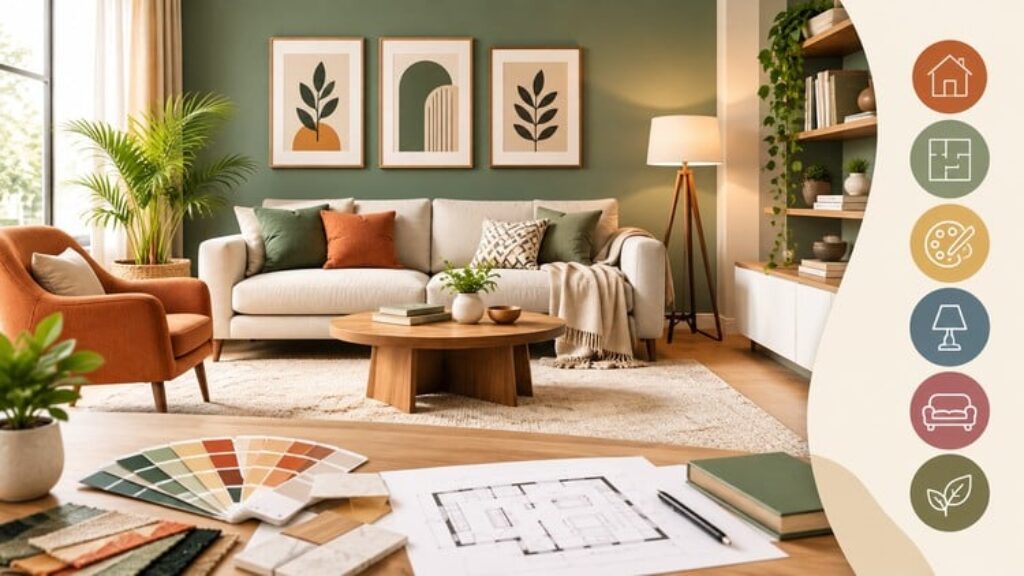
If you have ever looked at a room and thought, “Something is missing,” or wondered how professional interior designers choose colors, furniture, lighting, materials, and decorations, this course is designed to help you understand the process from the ground up.
Interior Design & Home Decorating for Beginners is a complete beginner-friendly course that introduces you to the fundamental principles of interior design and home decoration. You do not need previous experience, professional training, or advanced design knowledge to take this course. We will start with the basics and gradually build your understanding of how different design decisions work together to create spaces that are beautiful, comfortable, functional, and well organized.
Throughout the course, you will learn how interior design works and how designers think about a space before making design decisions. You will explore the principles and elements of interior design, including balance, proportion, rhythm, harmony, emphasis, color, texture, form, and space. These fundamentals will help you understand why some interiors feel visually balanced and inviting while others may feel uncomfortable or incomplete.
You will also learn the basics of space planning, including how to think about the available space, room measurements, furniture placement, circulation, and functional requirements. Understanding space is one of the most important parts of interior design because a beautiful room still needs to work well for the people using it.
The course also introduces you to popular interior design styles, helping you understand the characteristics of different design approaches and how to choose a style that suits a particular space, lifestyle, and personal preference. Rather than simply memorizing style names, you will learn what to look for when identifying and selecting an interior design style.
Color is another major part of the course. You will learn the fundamentals of color theory and how colors influence the appearance and atmosphere of an interior. You will also learn how to create a coordinated color palette instead of randomly selecting different colors for a room.
You will explore how to make better decisions about furniture selection and arrangement, including how furniture relates to room size, function, proportion, circulation, and overall design style. You will understand why choosing the right furniture is not only about appearance but also about comfort, usability, and how the pieces work together within a space.
The course also covers lighting in interior design, including the importance of lighting in creating atmosphere, supporting different activities, and highlighting important areas of a room. You will develop a basic understanding of how lighting contributes to the overall interior rather than treating it as an afterthought.
You will learn about flooring, wall finishes, textures, and materials, and how these elements contribute to the visual and tactile character of an interior. You will also explore soft furnishings and decorative accessories, including how smaller elements can add comfort, personality, visual interest, and finishing touches to a space.
The course then moves into practical design thinking for different areas of the home. You will explore the fundamentals of living room interior design, bedroom interior design, kitchen and dining room design, bathroom design, and home office design. This will help you understand how the principles you learn throughout the course can be applied to different types of rooms.
You will also learn how to approach small spaces, where careful planning becomes especially important. We will look at how space limitations can be handled through better planning, furniture choices, visual strategies, and organization.
The course introduces sustainable interior design so you can understand the importance of making more responsible choices when selecting materials, furniture, finishes, and other elements for an interior.
Finally, you will explore budget-friendly home decoration and learn how thoughtful design does not always require expensive products or a large budget. Good planning, appropriate selection, and careful coordination can make a significant difference even when resources are limited.
By the end of the course, you will have a strong foundation in interior design and home decorating and a clearer understanding of how to approach an interior from the initial planning stage through to the final decorative details.
In this course, you will learn:
-
The fundamentals and purpose of interior design
-
The major principles and elements of interior design
-
How to understand and plan interior spaces
-
How to work with room measurements
-
Popular interior design styles and their characteristics
-
How to choose an appropriate design style
-
The basics of color theory
-
How to create coordinated interior color palettes
-
How to select furniture according to space and function
-
How to arrange furniture effectively
-
The role of lighting in interior design
-
Flooring and wall finish considerations
-
How textures and materials affect an interior
-
The role of soft furnishings and decorative accessories
-
Basic design approaches for living rooms and bedrooms
-
Kitchen and dining room design fundamentals
-
Bathroom and home office design fundamentals
-
Strategies for designing small spaces
-
Basic concepts of sustainable interior design
-
Budget-friendly approaches to home decoration
-
How to bring different design elements together into a cohesive interior
This course is suitable for complete beginners, homeowners, aspiring interior designers, design students, decorators, and anyone who wants to develop a better understanding of how beautiful and functional interiors are created.
Whether you are interested in improving your own home, exploring interior design as a new field, or simply want to understand the fundamentals before taking more advanced courses, this course provides a structured starting point.
You do not need to be an expert to begin. The goal is to help you develop a clear design foundation, understand the reasoning behind common interior design decisions, and become more confident when looking at, planning, and decorating interior spaces.
Thank you for joining this course, and I hope you enjoy learning about interior design and home decorating.