This course contains the use of artificial intelligence.
Most AI coding courses stop at “install it and ask it something.” This one ends with an agent that fixes a real defect and hands you the evidence.
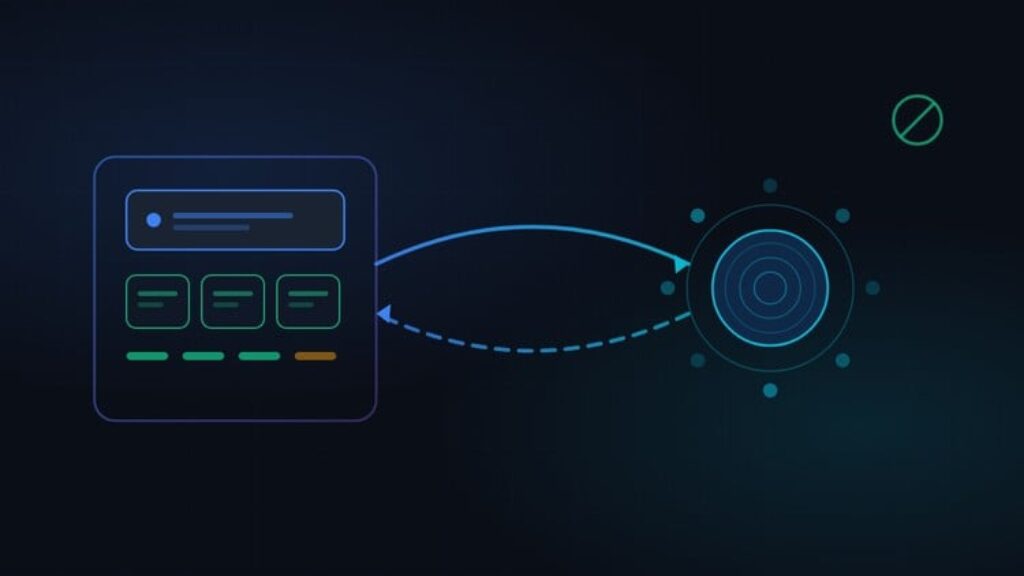
DeepSeek Harness is an open-source, MIT-licensed agent harness built on a single idea: everything is a plugin. Models, tools, skills, sessions, the agent loop itself — all swappable. That makes it an unusually good place to learn how coding agents actually work, because nothing is hidden behind a product.
The catch with most agent courses is the bill. This one has none. The harness runs locally on an ordinary Windows, macOS or Linux machine, and the thinking happens on a free cloud model — Gemini’s free API tier as the primary route, with explicit free OpenRouter models as a second provider for when a quota runs out. No paid API key. No GPU. No subscription. There is an optional section for running a small model entirely locally through Ollama, for work you cannot send anywhere.
What makes this different
Anyone can film an agent succeeding. The hard part — the part that decides whether you can trust one of these things at work — is telling the difference between an agent that did the job and an agent that says it did. That distinction runs through the whole course.
You will read trajectories: the actual model requests, tool arguments, tool responses and commands recorded for every session. You will set permission modes so an exploration task cannot write a file, rather than politely asking it not to. You will review diffs before approving them, separate pre-existing test failures from ones you just caused, and require the agent to show real test output instead of a summary.
The capstone has an automatic-fail rule that says everything about the course’s priorities: if your agent claims success but the trajectory shows no test was ever run, you fail — even if the code happens to be correct.
What you’ll build
- Project 1 — Repository Explorer. An agent that inspects a codebase and reports on it, verified to have changed nothing at all.
- Project 2 — Controlled Bug Fix. Reproduce a real defect, plan the fix, change one file, add a regression test that fails before and passes after.
- Project 3 — Custom Project-Audit Tool. A plugin you write, which then has to load in a second project unmodified.
- Capstone — Repository Maintenance Agent. Issue intake through to a verified, auditable completion report. The obvious fix is not the whole fix, and only your evidence reveals it.
Everything runs against a small practice repository built for this course: zero dependencies, sixteen tests, and defects that genuinely reproduce.
You’ll also learn to
Configure a custom model provider from scratch — base URL, protocol, credential, model catalogue — and swap providers without touching your project. Write persistent project instructions the agent actually follows. Package a reusable skill, a slash command and a tool as plugins. Run the harness headless for automation, and drive it from Python. Decide when a second agent helps and when it just duplicates work.
An honest note before you enrol
DeepSeek Harness is a developer preview. It ships breaking changes. The course names the exact version everything was recorded against, ships a version sheet, and — more usefully — teaches you the methods for finding the current answer yourself rather than memorising strings that expire. Free tiers are a commercial condition, not a property of the software, and the course says so plainly instead of pretending otherwise.
You should be able to open a terminal and read a small JavaScript file. You do not need any prior AI or agent experience.
This course is independent and is not affiliated with, endorsed by, or sponsored by DeepSeek, Google, OpenRouter or Ollama.




![AWS AI Practitioner AIF-C01 Exam [Mock Test 2026]](https://courses.impodays.com/wp-content/uploads/2026/04/7091443_cab9-100x56.jpg)


![Past Consul Associate Exam Prep Fast – Practice Tests [2026]](https://courses.impodays.com/wp-content/uploads/2026/04/7125583_4607-100x56.jpg)