Course Title
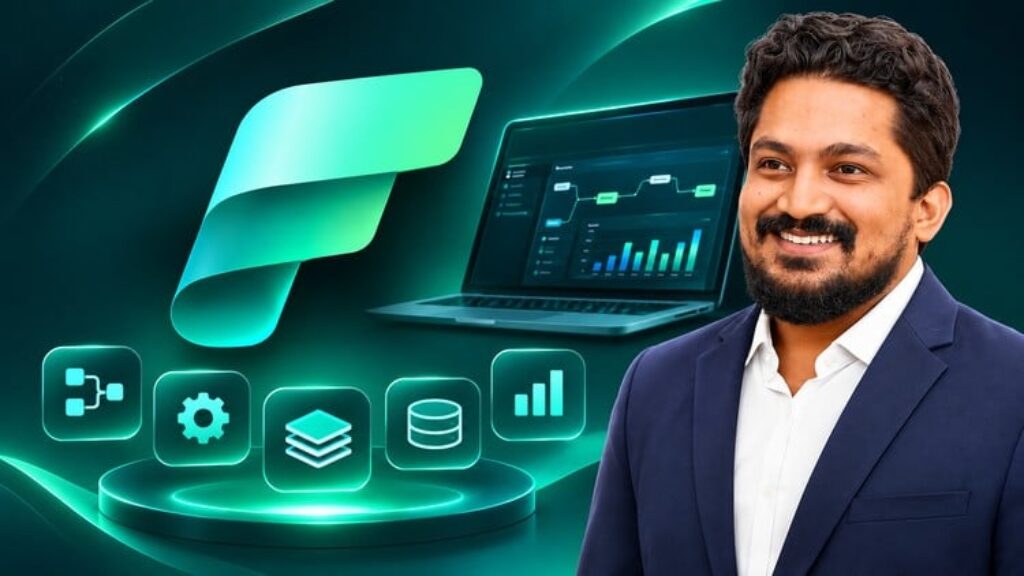
Microsoft Fabric Data Engineering: From SQL & Python to Spark, Lakehouse and Pipelines
Subtitle
A hands-on, end-to-end program covering SQL, Python, PySpark, Microsoft Fabric, Data Factory and Power BI
Course Description
Become a job-ready data engineer with one complete program, starting from the basics and going all the way to building modern analytics solutions on Microsoft Fabric.
You will begin with the foundations: data formats, cloud concepts, ETL vs ELT, data architecture, OLAP vs OLTP, and normalization. Then you will master SQL end to end, covering DDL, DML and DQL, joins, subqueries, CTEs, functions, views, stored procedures, triggers, indexes, cursors and error handling. Next comes Python for data work, from variables, data structures, loops and OOP to UDFs, NumPy and Pandas.
With that foundation in place, you will move into Microsoft Fabric. You will work with Lakehouse architecture, the SQL Analytics Endpoint, OneLake and shortcuts, materialized lake views, workspace access levels, notebooks and notebookutils. You will build ingestion pipelines in Data Factory and Dataflow Gen2, including on-premises data movement through a gateway. You will also process data at scale with PySpark and Spark SQL, covering DataFrames, transformations, ranking, joins, set operations, JSON and API data, and writing data back to the lakehouse. Finally, you will explore Power BI and Power Query to turn your data into insights.
What You Will Learn
-
Core data engineering concepts: cloud, ETL/ELT, data architecture, OLAP/OLTP, normalization
-
Writing, optimizing and structuring SQL queries and database objects
-
Python programming and data analysis with NumPy and Pandas
-
Building and managing Lakehouses, OneLake shortcuts and materialized views in Fabric
-
Creating pipelines and dataflows to ingest data from files, databases and APIs
-
Transforming big data with PySpark and Spark SQL
-
Parameterizing and orchestrating notebooks and pipelines
-
Getting started with Power BI and Power Query for reporting
Who This Course Is For
-
Beginners and career switchers aiming for data engineering roles
-
SQL, BI or data analysts moving to Fabric and Spark
-
Professionals looking to modernize their skills on the Microsoft data platform
Prerequisites
No prior experience is required. Basic computer skills and curiosity about data are enough.
Shorter version (for marketing pages or ads):
Learn SQL, Python, PySpark, Microsoft Fabric, Data Factory and Power BI in one hands-on program. Build real lakehouse pipelines from scratch and graduate ready for modern data engineering roles.
If you’d like, I can also suggest alternate title options, a module-wise curriculum outline, or SEO keywords for your course listing.