Advertisements

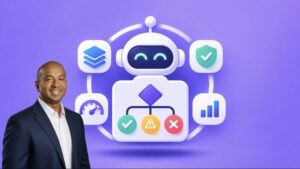
AI Security Fundamentals: Secure LLMs and AI Applications

Advertisements
Identify and reduce prompt injection, data leakage, supply chain attacks, and agent security risks with practical labs.
1
1/5
(63) Ratings
0 students
Created by School of AI
Advertisements

What you'll learn

  • Identify common AI security threats, including prompt injection, data leakage, model supply chain attacks, and data poisoning.
  • Understand and apply the OWASP Top 10 for LLM Applications to identify and mitigate AI security vulnerabilities.
  • Implement practical prompt injection defenses, input validation, output filtering, and AI security guardrails.
  • Protect sensitive information using PII redaction, access controls, secure data handling, and privacy safeguards.
  • Secure LLM applications, RAG pipelines, vector databases, and AI agents against unauthorized access and misuse.
  • Evaluate AI model supply chain security, verify model integrity, and identify compromised dependencies.
  • Apply AI threat modeling, defense-in-depth, and Zero Trust principles to AI application architectures.
  • Build and test secure AI applications using Python, FastAPI, Ollama, and automated security testing tools.
  • Implement AI API security, authentication, authorization, rate limiting, and least-privilege controls.
  • Perform controlled AI security assessments, develop incident response plans, and document security risks.
This course includes:
8.5 total hours on-demand video
1 articles
1 downloadable resources
109 lessons
Full lifetime access
Access on mobile and TV
Certificate of completion
Advertisements

Course content

Requirements

  • No prior AI security or cybersecurity experience is required. The course begins with fundamental concepts.
  • Basic understanding of computers, software applications, and internet technologies is helpful.
  • Familiarity with Artificial Intelligence, Generative AI, or ChatGPT is beneficial but not mandatory.
  • Basic Python programming knowledge is recommended for hands-on coding exercises, but guided examples are provided.
  • A Windows, macOS, or Linux computer with an internet connection for downloading course materials.
  • Willingness to install free development tools such as Python, VS Code, Ollama, and FastAPI for practical labs.
  • No paid software, cloud subscriptions, or commercial AI API keys are required.
  • Curiosity about AI security, cybersecurity, ethical hacking, and secure AI application development.

Description

This course contains the use of artificial intelligence.

AI is transforming software development, but every intelligent application introduces new security challenges. From chatbots and large language models to autonomous AI agents, organizations need professionals who understand how AI systems can be attacked—and how to defend them.

Welcome to AI Security Fundamentals: Secure LLMs and AI Applications, a practical course covering AI cybersecurity, Generative AI security, LLM security, and the controls used to protect real-world AI applications. You’ll move beyond theory to explore common vulnerabilities, implement defenses, and test your work through guided, hands-on labs.

What You’ll Learn

You’ll start with AI security fundamentals, AI threat modeling, attack surfaces, and trust boundaries. Then you’ll investigate the risks highlighted by the OWASP Top 10 for LLM Applications, including prompt injection, indirect prompt injection, sensitive data disclosure, data leakage, model supply chain attacks, and data poisoning.

You’ll also explore Retrieval-Augmented Generation (RAG) security, vector database security, access control, insecure output handling, and system prompt leakage. As AI applications become more autonomous, you’ll learn to reduce AI agent security risks, excessive agency, tool-calling vulnerabilities, and unauthorized actions through least-privilege access, authorization checks, and human approval workflows.

Security isn’t only about finding vulnerabilities. You’ll build defenses using input validation, output validation, PII redaction, authentication, API security, rate limiting, model integrity verification, and defense-in-depth architecture. You’ll practice secure AI development, DevSecOps for AI, security testing, AI security monitoring, and incident response.

Learn by Building

Throughout the course, you’ll work with BrightDesk, a fictional enterprise AI customer-support assistant. Step by step, you’ll assess its architecture, identify threats, protect sensitive data, secure retrieval workflows, validate model artifacts, and control AI agent permissions.

Hands-on exercises use accessible tools such as Python, FastAPI, Ollama, FAISS, and pytest. You’ll learn how to perform controlled tests in a local environment, evaluate defenses, and document residual risks. No paid AI API subscription is required, and starter examples make the practical work approachable.

You’ll also become familiar with widely used guidance including NIST AI Risk Management Framework (AI RMF), MITRE ATLAS, and OWASP LLM security resources.

The final capstone connects everything: you will create a security checklist, map AI application vulnerabilities, add practical safeguards, run security regression tests, and present findings to stakeholders. This mirrors how real teams collaborate across engineering, architecture, privacy, and security—not by promising perfect protection, but by continually improving measurable controls over time.

Who Should Enroll?

This course is designed for software developers, AI engineers, solution architects, cybersecurity analysts, security engineers, DevSecOps professionals, and technical leaders responsible for deploying AI safely. Beginners are welcome; basic Python familiarity is helpful for coding exercises but not mandatory.

By the end, you’ll have more than a vocabulary of AI threats. You’ll have practiced applying security controls, producing an AI security risk assessment, and building a portfolio-ready secure AI application prototype. Whether you’re securing your first LLM-powered chatbot or reviewing an enterprise AI architecture, you’ll leave with a practical foundation for making AI applications more resilient.

Enroll and start building AI systems with security in mind from day one.

Who this course is for:

  • Beginners and students interested in learning AI security fundamentals and understanding emerging cybersecurity threats.
  • Software developers who want to secure applications powered by Large Language Models (LLMs) and Generative AI.
  • AI engineers and machine learning developers building secure AI assistants, RAG applications, and autonomous AI agents.
  • Cybersecurity professionals and security analysts expanding their expertise into AI security, LLM vulnerabilities, and AI threat modeling.
  • DevSecOps engineers interested in integrating automated security testing and security controls into AI development pipelines.
  • AI architects and solution architects responsible for designing secure, scalable, and enterprise-ready AI systems.
  • IT professionals and cloud engineers managing AI infrastructure, model endpoints, APIs, and enterprise AI deployments.
  • Security consultants and penetration testers looking to understand AI-specific vulnerabilities and defensive testing techniques.
  • Technical managers and technology leaders responsible for AI security risk assessments, governance, and secure AI adoption.
  • Career changers and aspiring AI security engineers seeking practical, hands-on experience with AI security tools and techniques.
Advertisements
NOVFREE01
Advertisements
Advertisements
Free Online Courses with Certificates
Logo
Register New Account