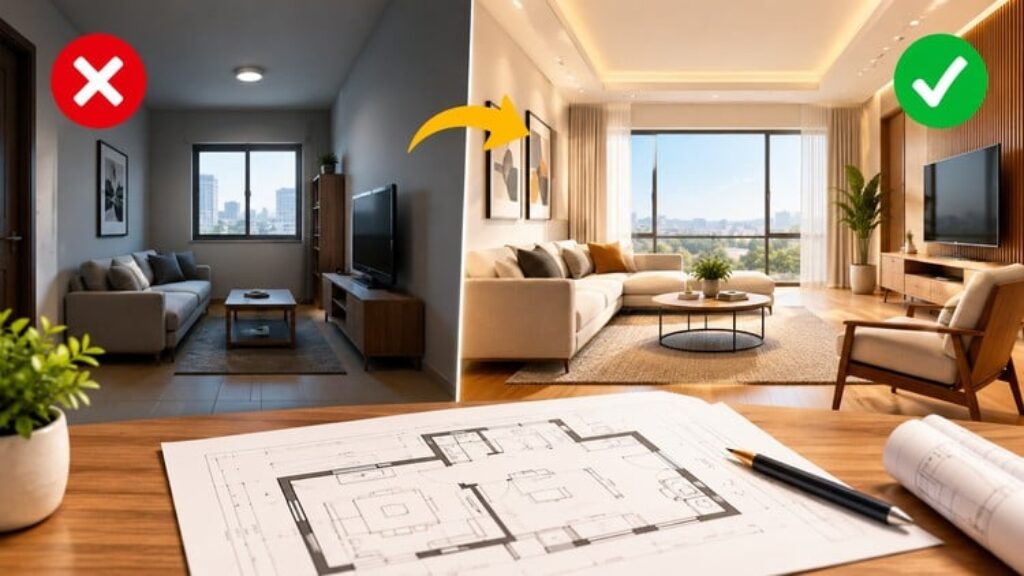
Are you learning architecture or interior design and want to understand why some designs look good but still feel uncomfortable, unbalanced, or impractical?
Good design is not just about appearance. It also requires proper space planning, suitable dimensions, effective lighting, balanced colors, appropriate materials, and functional layouts. Beginners often make mistakes in these areas because they are still learning how to apply design principles to real spaces.
In this course, 10 Design Mistakes in Architecture & Interior Design for Beginners, you will learn to recognize common design problems, understand why they happen, and explore practical ways to correct them. Through clear explanations, drawings, visual examples, and design principles, you will develop a better understanding of how to make thoughtful design decisions.
Throughout the course, we will explore ten common design mistakes and how to fix them, including:
-
Poor Space Planning: Understand how ineffective space planning affects the use of a space and learn how to approach layouts more carefully.
-
Ignoring Human Scale and Ergonomics: Learn why dimensions, proportions, comfort, and the relationship between people and spaces matter.
-
Poor Lighting Design: Understand common lighting mistakes and how to improve lighting decisions for interior spaces.
-
Bad Color Combinations: Explore common color-selection problems and learn how to create more balanced color schemes.
-
Poor Material Selection: Understand why material choices matter and how to select materials more appropriately for a design.
-
Wrong Furniture Placement: Learn how furniture arrangement affects movement, usability, and the overall layout of a room.
-
Poor Proportion and Balance: Recognize designs that feel unbalanced and understand how proportion and visual balance influence the result.
-
Ignoring Functional Needs: Learn why a design must respond to the practical needs of the people who will use the space.
-
Poor Door, Window, and Circulation Planning: Understand how planning decisions can affect movement, accessibility, and the use of a space.
-
Designing Without a Concept: Explore the importance of having a clear design direction and making decisions that support a consistent concept.
Each mistake is followed by a dedicated lecture explaining how to address the problem. This approach helps you understand both sides of the design process: recognizing what is going wrong and learning how to improve it.
The course is suitable for architecture students, interior design students, aspiring designers, and beginners who want to strengthen their understanding of design fundamentals. It can also help self-learners who are interested in improving their approach to residential interiors, room layouts, and architectural design.
You do not need to be an experienced designer to benefit from this course. The topics are explained in a straightforward way, making it easier to understand the principles behind common design problems and their possible solutions.
By the end of the course, you will have a clearer understanding of space planning, human scale, lighting, color selection, materials, furniture layout, proportion, functionality, circulation, and design concepts. You will also be better prepared to identify common design mistakes and make more informed decisions in your architecture and interior design projects.
Remember, a successful design is not simply one that looks attractive. It should also be comfortable, functional, well-balanced, and suitable for the people who use it.
Enroll today and start building a stronger foundation in architecture and interior design by learning from ten common design mistakes and understanding how to correct them.
Thank you for choosing this course. I look forward to helping you improve your design knowledge and skills!