This course contains the use of artificial intelligence.
AI is used to reframe the words, fixing spelling mistakes and grammatical mistakes and audio conversion.
Your warehouse is measured to the minute. Outside the building, nineteen trailers sit on ground nobody owns, counted once a day by somebody walking round with a clipboard. That strip of land between the public road and the dock door is where most distribution sites lose hours they never see, and where the detention invoices come from.
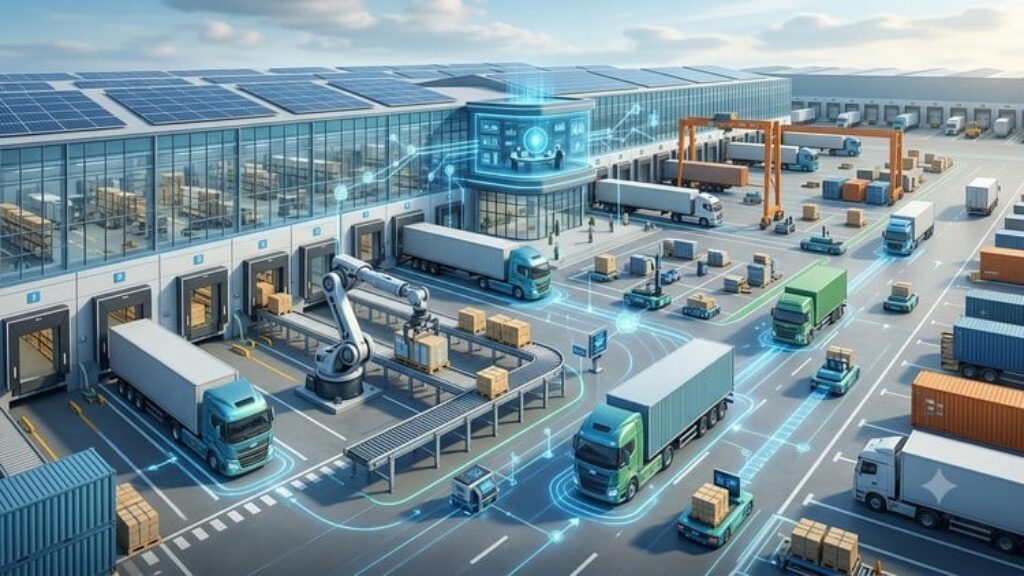
This course treats the dock and yard as an operational job rather than a software category. It starts with the three clocks that cost money – dwell, detention and demurrage – and the seven timestamps that every later argument depends on. From there it works through the whole inbound and outbound interface: what a booking must carry before a vehicle moves, what a gate process really takes, how to design appointment slots around capacity you actually have, how many dock doors you need and how to assign them, and how to run a yard where trailers can be found.
It then covers the data layer honestly: what a yard management system does that a warehouse or transport system does not, what advance shipping messages promise and how often they are wrong, and who should own which fact when four systems disagree about one arrival time. The automation section covers self check-in, plate and container recognition, automated yard checks and dock equipment, including the problems automation makes faster rather than solves. The artificial intelligence section is deliberately sober: dwell prediction, dynamic scheduling and computer vision assessed against what the data supports today, and three ways these tools degrade an operation while the numbers improve.
Detention and demurrage get a section of their own, treated as a commercial discipline: how to read a claim, what evidence settles one, what the contract behind it actually says, and how to turn a month of claims into the site changes that prevent them. The course closes with the six numbers worth reporting, the metrics that mislead, the business case, and how to implement without stopping a site that cannot close.
Examples run in dollars and rupees, on real-shaped sites: a regional distribution centre, a haulier whose drivers wait, and a cold store where dwell costs product as well as time. No vendor is named and no product is sold. If you run a dock, plan transport into one, or are about to be asked why the queue outside is two hours long, this is the course for you.