Advertisements

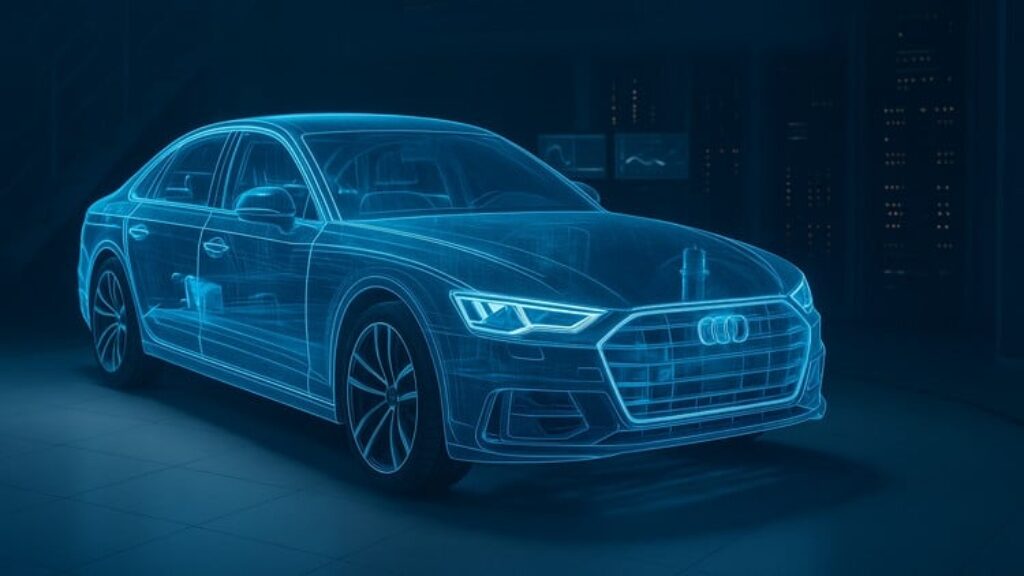
Digital Twin Applications in Automotive Engineering

Advertisements
A Complete Guide to Digital Twins in Automotive: Learn Vehicle Simulation, Virtual Testing & Real-Time Diagnostics
5
5/5
(1) Ratings
308 students
Created by Aditya Bharat Patil
Advertisements

What you'll learn

  • Grasp the core principles and architecture of digital twin systems, including physics-based modeling, real-time data integration, and cloud-edge analytics
  • Apply digital twin methodologies to vehicle design optimization, including structural, thermal, NVH, and aerodynamic performance.
  • Leverage simulation-based digital twins for virtual testing, validation, and homologation, reducing physical prototyping cycles.
  • Understand the deployment of operational digital twins for predictive maintenance, diagnostics, and fleet analytics.
  • Integrate digital twins with Industry 4.0 and IoT frameworks for smart manufacturing and connected vehicle systems.
  • Evaluate case studies involving ADAS, EV powertrains, battery systems, and autonomous vehicle testing, all through a digital twin lens.
  • Use digital twin data for lifecycle cost reduction, product quality assurance, and regulatory compliance.
This course includes:
2 total hours on-demand video
0 articles
5 downloadable resources
11 lessons
Full lifetime access
Access on mobile and TV
Certificate of completion
Advertisements

Course content

Requirements

  • Basic knowledge of mechanical or automotive systems
  • Familiarity with engineering design or simulation concepts
  • No prior experience with digital twins or programming needed
  • Exposure to tools like MATLAB, CAD, or Python is helpful but not required

Description

The future of automotive engineering is here — and it’s digital, dynamic, and data-driven.

In this in-depth course, you’ll explore how Digital Twin technology is transforming the design, testing, optimization, and lifecycle management of modern vehicles. From high-fidelity simulation to predictive maintenance and real-time telemetry, digital twins are changing how we build and operate intelligent, high-performance automotive systems.

Whether you’re an engineer, product developer, systems architect, or technical leader — this course will equip you with the tools and frameworks to understand, apply, and lead in the age of digital twins.

What You’ll Learn

Core concepts behind digital twins and their evolution in automotive systems
How digital twins are applied across design, simulation, control, and testing
The role of MBSE (Model-Based Systems Engineering) and digital thread integration
Fleet-wide data collection, edge computing, and cloud-twin synchronization
Predictive maintenance, OTA updates, and real-world industry case studies
Future trends: AI-augmented twins, quantum simulation, neuromorphic control, and blockchain

Who This Course is For

  • Mechanical, Automotive, and Mechatronics Engineers

  • Embedded Systems and Control Engineers

  • R&D and Product Development Teams

  • MBSE Practitioners and Systems Engineers

  • Fleet Managers, Diagnostics, and Reliability Professionals

  • Graduate Students and Industry Transitioners exploring AI, IoT, or Smart Manufacturing

What You Need

  • A basic understanding of mechanical or automotive systems

  • Familiarity with engineering modeling, simulation, or system design

  • No prior experience with digital twins, AI, or programming is required

By the end of this course, you’ll be able to design and deploy digital twin frameworks, connect physical systems to simulation environments, and understand how data, physics, and software combine to drive real-time decisions across the automotive product lifecycle.

Join us and build the future of automotive innovation, one twin at a time.

Who this course is for:

  • Automotive engineers involved in design, simulation, testing, or product development who want to integrate digital twin methodologies into their workflows.
  • Mechanical, electrical, and systems engineers seeking to upskill in model-based systems engineering (MBSE), cyber-physical integration, and real-time simulation.
  • R&D professionals in the automotive domain looking to accelerate innovation through digital prototyping and data-driven decision-making.
  • Engineering managers and technical leads aiming to implement digital transformation strategies across vehicle programs, manufacturing, and operations.
  • Graduate students and researchers in automotive engineering, control systems, or data-driven design, who want a cutting-edge industry perspective on digital twin applications.
  • Product lifecycle managers and digital transformation consultants working in automotive OEMs, Tier-1 suppliers, or tech firms supporting Industry 4.0 integration.
Advertisements
PROMO1
Advertisements
Advertisements
Free Online Courses with Certificates
Logo
Register New Account