This course contains the use of Artificial Intelligence.
[[ Unofficial Course ]]
Master the principles, patterns, and practical techniques of Dependency Injection and Inversion of Control with this comprehensive course designed for software developers, engineers, and architects who want to build cleaner, more flexible, maintainable, and testable applications.
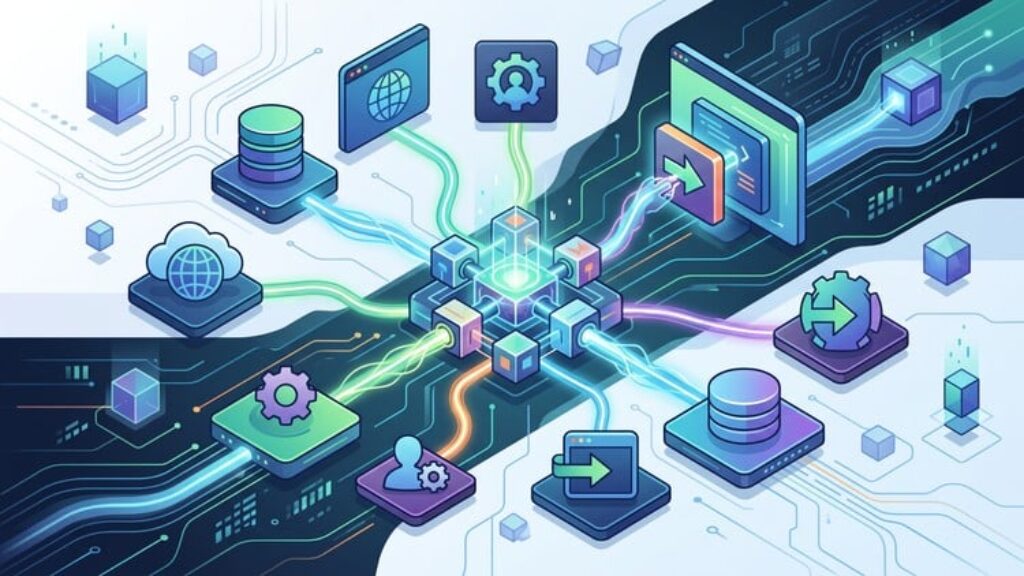
This course takes you from the fundamental concepts of software coupling and dependencies to advanced architectural applications of Dependency Injection. You will develop a clear understanding of why tightly coupled software can become difficult to maintain and how Dependency Injection helps create loosely coupled systems that are easier to extend, test, and manage.
You will begin by exploring coupling, dependencies between classes, hard-coded dependencies, and the Inversion of Control principle. You will then learn how IoC relates to Dependency Injection and understand the core mechanics behind injecting dependencies into application components.
The course provides a detailed examination of the key participants in Dependency Injection, including clients, services, and injectors. You will also compare Dependency Injection with commonly used alternatives such as the Factory Pattern and Service Locator Pattern, helping you understand the advantages, limitations, and appropriate use cases of each approach. The Dependency Inversion Principle and its relationship to the SOLID principles will further strengthen your ability to design flexible and maintainable software.
You will explore the major Dependency Injection strategies, including Constructor Injection, Setter Injection, Interface Injection, and Method Injection. Each approach is examined in terms of its mechanics, benefits, limitations, practical use cases, and design trade-offs, allowing you to make informed decisions when selecting an injection strategy.
The course also introduces IoC containers and explains how they manage and resolve dependencies. You will learn how dependency resolution works and how different object lifecycles affect application behavior and resource management. Transient, Singleton, and Scoped lifecycles are covered so you can understand how object creation, reuse, and lifetime management influence application architecture.
Beyond the mechanics, this course focuses on the architectural impact of Dependency Injection. You will discover how DI can be incorporated into layered and modular systems while improving separation of concerns and reducing unnecessary coupling between components. You will also explore how Dependency Injection supports unit testing, mocking, and the development of independently testable application components.
A major focus throughout the course is designing clean interfaces for injectable services. You will learn how to think about abstractions, responsibilities, dependencies, and boundaries when designing software components, helping you avoid unnecessary complexity and create architectures that are easier to evolve.
By the end of the course, you will have a strong understanding of Dependency Injection, Inversion of Control, IoC containers, injection strategies, object lifecycles, SOLID principles, testing implications, and architectural design.
You will be better prepared to analyze existing dependency structures, identify tightly coupled designs, select appropriate DI techniques, and design software that is modular, maintainable, flexible, and testable.
Whether you are learning Dependency Injection for the first time or looking to strengthen your software architecture skills, this course provides a structured and practical foundation for applying DI principles to real-world software development.
Thank you