Advertisements

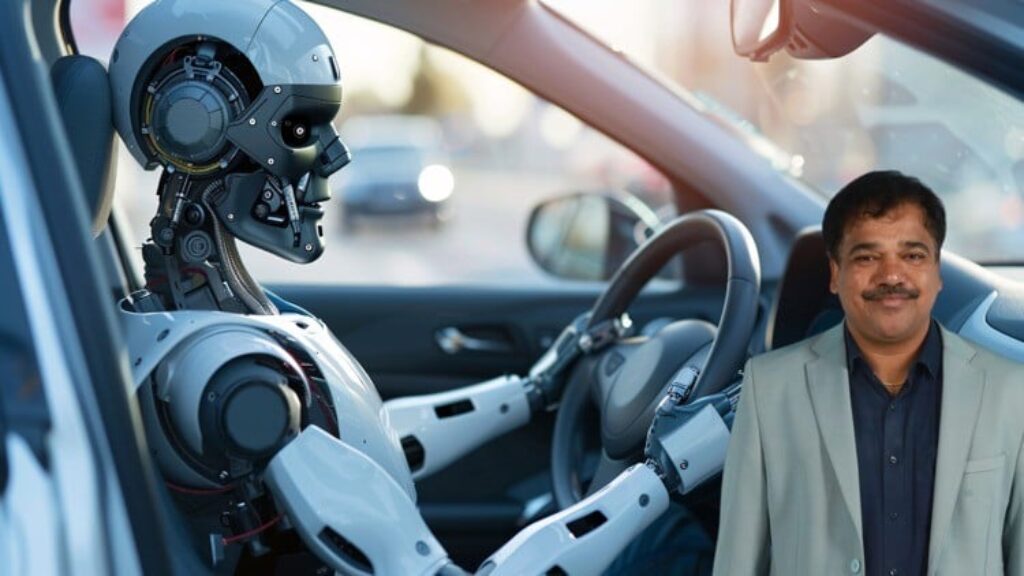
Building a Self-Controlled Car through AI inferences & IoT

Advertisements
Artificial Intelligence, automations, IoT, Self-driving, computer Vision, real-time detection, Arduino and Python
5
5/5
(1) Ratings
775 students
Created by Dommaraju Sireesha
Advertisements

What you'll learn

  • AI & IOT enthusiasts who want to build real-world autonomous systems using Python and computer vision.
  • AI professionals and students seeking hands-on experience with IoT, sensor integration, and Real time AI implementation.
  • Tech professionals exploring the intersection of AI, IoT, and embedded systems for smart mobility solutions
  • Educators and instructors looking to introduce practical autonomous vehicle concepts in classrooms or workshops.
  • Leadership people who are introduce latest technologies to implement in their organization
This course includes:
4.5 total hours on-demand video
0 articles
2 downloadable resources
38 lessons
Full lifetime access
Access on mobile and TV
Certificate of completion
Advertisements

Course content

Requirements

  • No prior knowledge & experience is required with Artificial Intelligence and IOT applications.
  • Just a passion for learning and a basic understanding of Python and AI

Description

• Implement real-time object detection using YOLO and OpenCV

• Integrate IoT sensors (ultrasonic) for autonomous navigation

• Integrate live inference models on Arduino board

• Design control systems for steering, braking, and obstacle avoidance

• Build and test a mini self-driving car with Python-based control logic

Autonomous vehicles represent a transformative leap in transportation, driven by the convergence of computer vision, IoT, and real-time inference technologies. At the heart of this innovation lies computer vision, which enables vehicles to “see” and interpret their surroundings using cameras and deep learning models. Through techniques like object detection, lane tracking, and semantic segmentation, vehicles can identify pedestrians, traffic signs, and other vehicles with remarkable accuracy.

Complementing this is the Internet of Things (IoT), which connects a network of sensors—ultrasonic (UV sensors) and ESP32 camera and Arduino, that continuously stream data to the vehicle’s onboard systems. IoT not only enhances situational awareness but also enables vehicle-to-everything (V2X) communication, allowing cars to interact with infrastructure and other vehicles for coordinated movement.

For educators and developers, mastering these systems opens doors to innovation in smart cities, robotics, and industrial automation. This course empowers learners to explore that future hands-on, combining theory with practical projects that bring autonomous systems to life.


Who this course is for:

  • This course is ideal for learners passionate about robotics, AI, computer vision and hands-on engineering in object detection. It’s designed for architects, software engineers, data scientists, leaders and professionals eager to explore computer vision, IoT, and autonomous systems through practical projects. If you have basic Python and electronics knowledge, you’ll learn to build a sensor-based self-driving car using OpenCV, Ardiuno, and real-time inference. Engineering students can apply theory to real-world applications, while makers and educators gain tools for innovation and teaching. Whether you’re preparing for a career in smart mobility or simply love intelligent machines, this course offers a gateway into the future of autonomous technology.
Advertisements
DCCDE7F10E939F5B8FEE&utm_source=CHRISTMAS2025
Advertisements
Advertisements
Free Online Courses with Certificates
Logo
Register New Account