
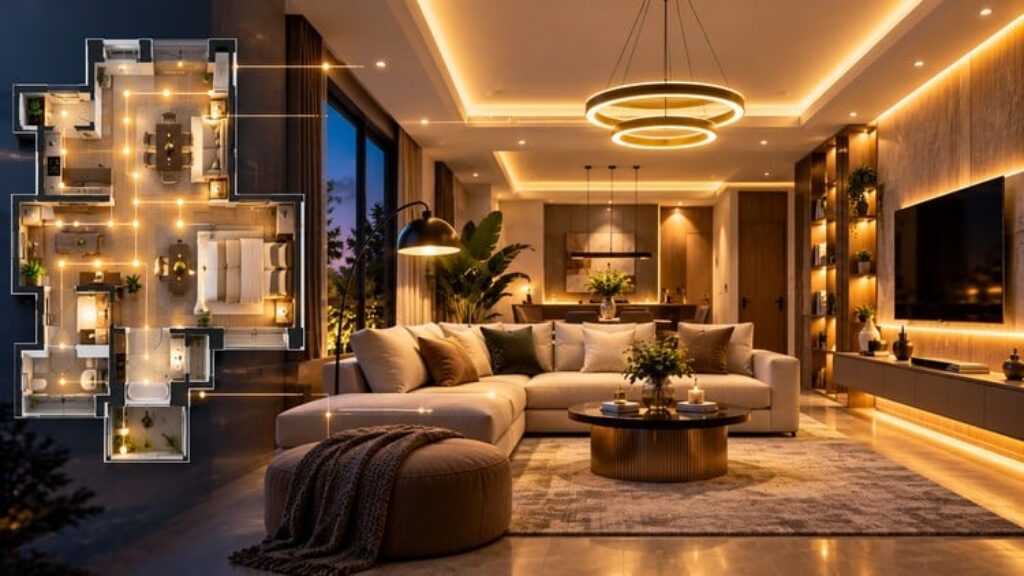
Lighting is one of the most important parts of interior design. A well-designed interior can lose its impact if the lighting is uncomfortable, poorly positioned, or unsuitable for the space. This course, Interior Lighting Design: Complete Guide for Beginners 2026, is designed to help beginners understand how lighting works and how it can be used to create comfortable, functional, and visually appealing interiors.
The course begins with the fundamentals of interior lighting design. You will understand the nature of light, why lighting matters in interior spaces, and why lighting design should be considered as an important part of the overall interior design process rather than something added at the end.
You will become familiar with essential lighting terminology and basic lighting concepts that can help you understand lighting more confidently. The course also explains how people perceive light and how different lighting conditions can influence the way we experience an interior space.
An important part of lighting design is understanding its effect on people. You will explore the psychology of light, including how lighting can influence mood, atmosphere, comfort, and the overall character of a room. You will also learn about visual comfort and glare control, helping you understand why some lighting environments feel pleasant while others can cause discomfort.
The course also introduces circadian lighting and well-being, giving you an understanding of the relationship between light, the human body, and our natural daily rhythms. This provides a broader view of lighting design that goes beyond simply making a room bright.
You will then learn about layered lighting, one of the most useful concepts in interior lighting design. Instead of depending on a single source of light, you will understand how different lighting layers can work together to create a balanced interior environment.
You will study the three important layers of interior lighting: ambient lighting, task lighting, and accent and decorative lighting. You will understand the purpose of each layer, where it can be used, and how combining different layers can improve both the function and appearance of an interior.
The course also introduces you to interior lighting fixtures, lamps, and light sources. You will learn the basic considerations involved in choosing suitable light fixtures and understand that fixture selection should respond to the function, atmosphere, scale, and design requirements of a space.
Another major part of the course focuses on applying these principles to different areas of the home. You will explore living room lighting, bedroom lighting, kitchen and dining room lighting, bathroom lighting, and home office and study room lighting. This room-by-room approach will help you understand how lighting requirements change according to the activities and atmosphere of each space.
By the end of the course, you should have a clearer understanding of how to approach lighting as part of an interior design project, how different lighting layers work together, how to think about visual comfort, and how to make more informed decisions when selecting and planning lighting for residential interiors.
This course is suitable for interior design students, beginners, homeowners, decorators, aspiring interior designers, and anyone interested in understanding interior lighting design. No advanced technical knowledge or lighting design software is required. The concepts are explained in simple language through presentation-based lessons, making the course accessible to learners who are starting from the basics.
If you want to understand Interior Lighting Design from fundamental concepts to practical room-by-room considerations, this course will provide you with a structured foundation that you can apply to your own interior design thinking and future projects.
Thank you, and I look forward to seeing you in the course.