Advertisements

Agentic Architecture: Enterprise AI Agent Systems Design

Advertisements
Architect production AI agents: patterns, memory, multi-agent, HITL & evals — hands-on with LangGraph
4.5
4.5/5
(4) Ratings
348 students
Created by Dr. Amar Massoud
Advertisements

What you'll learn

  • Choose deliberately between workflows, single agents, and multi-agent systems
  • Apply ReAct, plan-and-execute, and reflection patterns — and know when each fits
  • Design typed tool contracts and integrate enterprise systems via MCP
  • Architect short-term session state and long-term memory with deliberate forgetting
  • Decompose monolithic super-agents into orchestrator/worker topologies and weigh the tradeoffs
  • Design human-in-the-loop approval gates, autonomy tiers, and audit trails
  • Build the Agent Development Lifecycle: evals, tracing, versioning, CI gates
  • Produce a reference architecture and ADR set for an agent platform
This course includes:
4.5 total hours on-demand video
0 articles
1 downloadable resources
45 lessons
Full lifetime access
Access on mobile and TV
Certificate of completion
Advertisements

Course content

Requirements

  • Working Python knowledge and command-line comfort; Docker Desktop
  • No machine-learning background and no paid API keys required — all labs run locally

Description

This course contains the use of artificial intelligence.

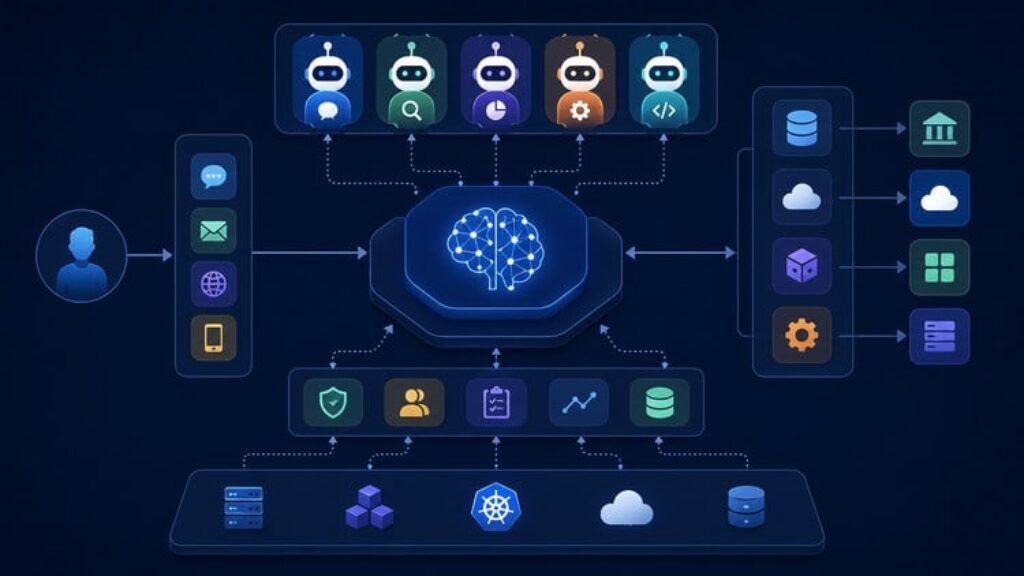
AI agents are moving into production, and someone has to architect them. This course is for that person. Instead of teaching one framework’s API, it teaches the architecture decisions that determine whether an agent system survives contact with the enterprise: when to use a workflow instead of an agent, which loop pattern fits which task, where the tool boundary sits, what state to persist and who owns it, when one agent should become many — and when it absolutely should not — where humans must stay in the loop, and how agents are tested, traced, and versioned like real software.

You learn by building. Across 8 hands-on labs (LangGraph + Ollama, all local, no API keys), you design and evolve Atlas, the agentic claims platform of Meridian Insurance Group — a realistic enterprise with legacy systems, compliance obligations, and impatient stakeholders. You implement ReAct and plan-and-execute side by side and measure the difference, expose enterprise systems through typed tools and MCP, give your agent durable memory across sessions, refactor a monolithic super-agent into an orchestrator/worker crew, add interrupt-based human approval gates, and build the eval suite and tracing that catch a regression before it ships. The capstone assembles everything into a production-shaped system defended before an architecture review board — with a reference architecture document and ADR set you can reuse at work.

By the end you’ll have a decision framework for every major agentic design choice, a working reference implementation, and the vocabulary to review any agent design with confidence.

Who this course is for:

  • Software architects, solution and enterprise architects, and tech leads
  • Senior engineers moving into AI platform / agent system design
  • Anyone who must design, review, or approve AI agent systems for production
Advertisements
8D96CC059FB5FCFB5DFC
Advertisements
Advertisements
Free Online Courses with Certificates
Logo
Register New Account