“This course contains the use of artificial intelligence.”
|| Unofficial Course ||
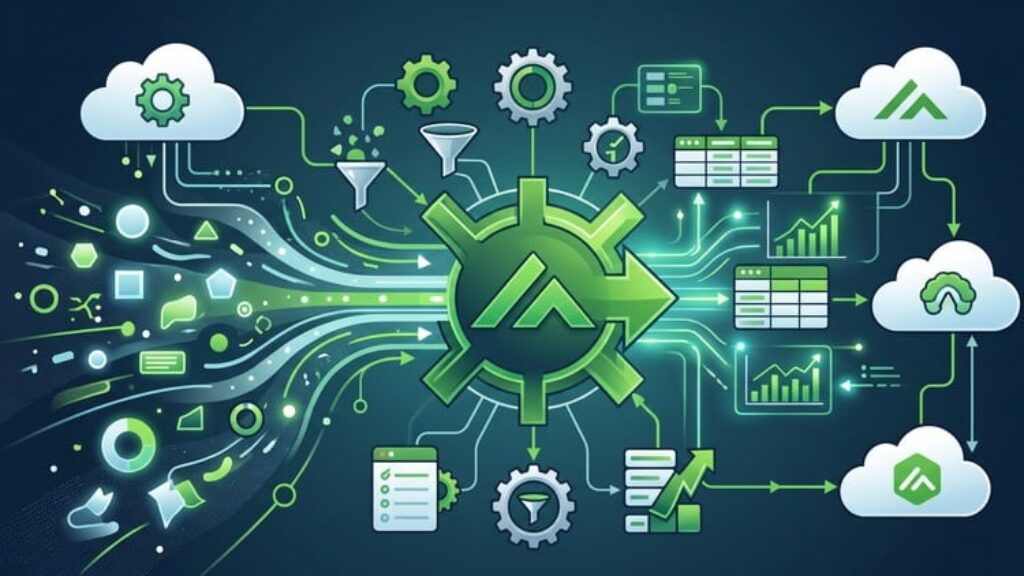
Welcome to Matillion Data Productivity Cloud Mastery: Complete ELT & Data Engineering, a comprehensive course designed to help you build a strong understanding of modern cloud-based data integration, orchestration, and transformation using Matillion.
Whether you are an aspiring data engineer, analytics professional, cloud developer, or IT practitioner, this course will provide you with the knowledge needed to understand how enterprise-grade ELT solutions are designed, managed, and optimized in today’s cloud data ecosystem.
Modern organizations generate enormous amounts of data from diverse sources, making efficient data integration and transformation more important than ever. Matillion has become one of the leading cloud-native ELT platforms, enabling organizations to automate data ingestion, build scalable transformation pipelines, integrate with leading cloud data warehouses, and deliver reliable data for business intelligence, reporting, machine learning, and advanced analytics.
This course takes you through the complete architecture, concepts, and best practices behind the Matillion Data Productivity Cloud and demonstrates how its components work together to create efficient, enterprise-ready data workflows.
You will begin by exploring the foundations of Matillion, including the evolution of ETL and ELT methodologies, the architecture of the Data Productivity Cloud, deployment models, cloud data warehouse integrations, and the security principles required to protect enterprise data environments. Understanding these core concepts will help you appreciate why cloud-native ELT has become the preferred approach for modern data engineering.
As you progress, you will gain a detailed understanding of orchestration pipelines, transformation workflows, connector frameworks, and data ingestion strategies. You will learn how Matillion manages data movement, transformation logic, metadata, and schema evolution while supporting scalable cloud data platforms. The course also explains how transformation components interact to create reliable and maintainable enterprise data pipelines.
A significant portion of the course focuses on workflow automation and dynamic pipeline design. You will explore variables, grid variables, parameterization techniques, conditional logic, looping strategies, environment management, and reusable workflow components that make enterprise data pipelines flexible, efficient, and easier to maintain.
Operational excellence is another key focus of this course. You will learn enterprise scheduling strategies, trigger mechanisms, transaction management, error handling methodologies, monitoring frameworks, audit logging, performance measurement, and governance principles.
You will also understand how version control with Git supports collaborative development and how organizations maintain high-quality deployment processes across multiple environments.
Performance optimization is covered extensively, enabling you to understand how to design scalable ELT workflows that maximize cloud warehouse performance while minimizing execution costs. You will explore optimization techniques for transformations, orchestration jobs, resource utilization, and workload management across cloud platforms.
The course also introduces several advanced topics that are increasingly important in modern data engineering. You will learn about processing semi-structured data, parsing and flattening complex datasets, integrating with external APIs, understanding custom connector architectures, working with modern data lake concepts such as Delta Lake, and designing highly available, fault-tolerant, enterprise-scale data integration solutions.
Throughout the course, emphasis is placed on industry best practices, architectural design principles, workflow optimization, governance, automation, scalability, and maintainability. Rather than simply learning individual features, you will develop a complete understanding of how enterprise organizations build reliable cloud ELT ecosystems using Matillion.
By the end of this course, you will possess a solid conceptual foundation in Matillion Data Productivity Cloud, understand modern ELT architecture and cloud data engineering principles, and be equipped with the knowledge required to contribute to enterprise data integration projects, support cloud analytics initiatives, and confidently explore advanced implementations in professional environments.
Whether your goal is to expand your cloud data engineering expertise, strengthen your understanding of enterprise ELT platforms, prepare for technical interviews, or advance your career in data engineering, analytics engineering, business intelligence, or cloud data architecture, this course provides a structured and comprehensive learning path to help you achieve those objectives.
Thank you







![[NEW] AZ-900 Microsoft Azure Fundamentals May 2026](https://courses.impodays.com/wp-content/uploads/2026/06/7022007_e924_2-100x56.jpg)

![AB-730: AI Business Professional Practice Exams [2026]](https://courses.impodays.com/wp-content/uploads/2026/05/7158703_913b_2-100x56.jpg)

![250+ Python DSA Coding Practice Test [Questions & Answers]](https://courses.impodays.com/wp-content/uploads/2026/06/7212773_55d5-100x56.jpg)