Welcome to the Electronics Repairing Masterclass, your comprehensive guide to mastering the art of electronics repair. This course is designed for anyone looking to gain a deep understanding of electronics, from the basic principles to advanced repair techniques. Whether you’re a hobbyist, a student, or a professional looking to expand your skill set, this course will provide you with the knowledge and practical skills you need to succeed.
We begin with a solid foundation in basic electronics, exploring the fundamental concepts of electricity, voltage, current, and resistance. You’ll learn to differentiate between AC and DC waves and understand the importance of frequency in electronic circuits. Through hands-on examples, we’ll illustrate simple circuits, series, and parallel connections to reinforce your understanding.
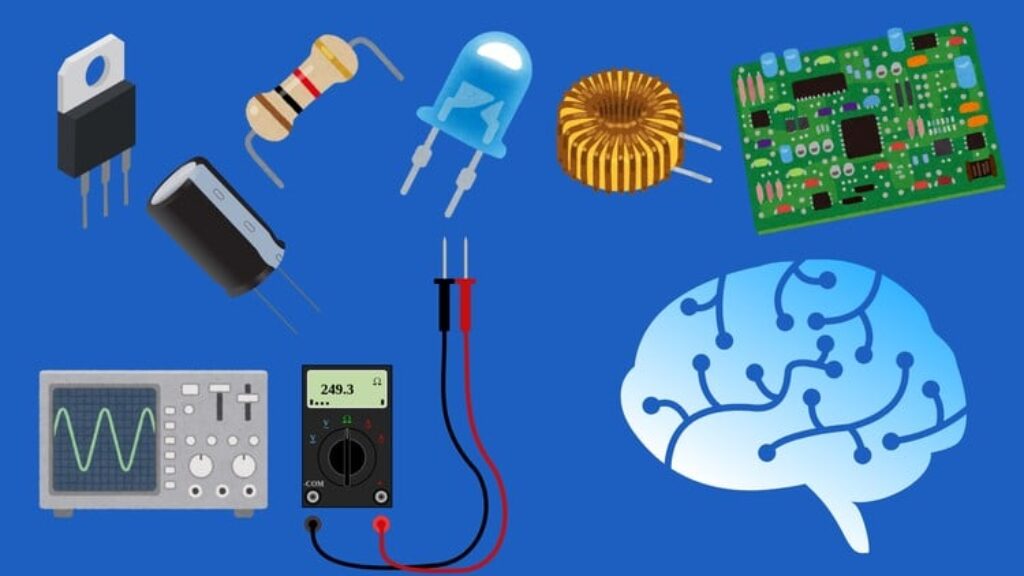
Next, we delve into the properties and applications of essential electronic components such as resistors, capacitors, diodes, transistors, IC chips, and transformers. You’ll learn how to identify and test these components, and understand their roles within a circuit.
The course also covers advanced topics such as circuit analysis techniques, diode operations and applications, and the design of power supply circuits. We’ll introduce you to the tools and equipment essential for electronics repair, including digital multimeters, oscilloscopes, function generators, and logic analyzers.
Finally, we’ll guide you through the process of troubleshooting and repairing electronic components and circuit boards. You’ll learn practical techniques for diagnosing issues, replacing faulty components, and ensuring the longevity and reliability of repaired devices.
By the end of this course, you’ll be equipped with the skills and confidence to tackle a wide range of electronics repair projects, from simple fixes to complex diagnostics and repairs.