Practical Poultry Bacteriology: Diagnosis & Control
From Flock Investigation to Evidence-Based Disease Management
Bacterial diseases can cause unexpected mortality, respiratory problems, reduced growth, poor egg production, and significant economic losses in poultry operations. However, recognizing clinical signs or memorizing disease names is only the beginning of solving a flock health problem.
Whether you are a veterinary student preparing for clinical practice, a veterinarian investigating recurrent outbreaks, or a poultry professional responsible for flock health, this course will help you develop a more systematic approach to poultry bacterial disease diagnosis and control.
What You Will Learn
By the end of this course, you will be able to:
-
Investigate suspected bacterial disease using flock history, clinical signs, mortality records, and production data.
-
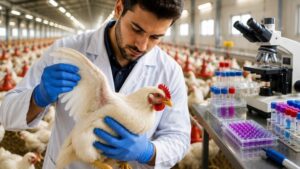
Perform systematic poultry necropsies and recognize important gross lesions.
-
Select appropriate diagnostic samples and understand their collection, handling, and laboratory examination.
-
Interpret laboratory findings alongside clinical, pathological, and epidemiological evidence.
-
Understand the pathogenesis, clinical presentation, differential diagnosis, and control of major poultry bacterial diseases.
-
Develop practical biosecurity, sanitation, and disease-prevention strategies.
-
Understand the role and limitations of vaccination in bacterial disease control.
-
Apply responsible antimicrobial-use principles and understand the importance of susceptibility testing.
-
Investigate recurrent outbreaks, persistent mortality, and unexplained production losses.
Diseases and Topics Covered
The course covers important poultry bacterial pathogens and disease syndromes, including:
-
Colibacillosis: infections associated with avian pathogenic Escherichia coli.
-
Fowl Cholera: disease associated with Pasteurella multocida.
-
Infectious Coryza: disease associated with Avibacterium paragallinarum.
-
Mycoplasmosis: including Mycoplasma gallisepticum and Mycoplasma synoviae.
-
Salmonellosis: including pullorum disease and paratyphoid infections.
-
Avian Chlamydiosis: diagnosis, management, and relevant public-health considerations.
-
Practical Diagnostics: flock investigation, necropsy, sample collection, laboratory interpretation, and differential diagnosis.
-
Prevention and Control: biosecurity, sanitation, vaccination principles, antimicrobial stewardship, and outbreak management.
A Practical Approach to Diagnosis and Control
This course emphasizes clinical reasoning rather than memorization alone. You will explore why similar signs may result from different diseases, why detecting a microorganism does not always prove that it is the primary cause of an outbreak, and why laboratory results must be interpreted in the context of flock history, lesions, and epidemiological evidence.
You will also examine the limitations of empirical antibiotic treatment, the importance of antimicrobial susceptibility testing, and the appropriate role of supportive and preventive approaches. Alternative interventions are discussed according to the evidence available for their specific applications.
Who Should Take This Course?
This course is suitable for:
-
Veterinary students preparing for poultry clinical practice.
-
Veterinarians working in poultry health and production.
-
Poultry farm managers and technical personnel involved in flock monitoring.
-
Laboratory personnel interested in poultry bacteriology and diagnostic interpretation.
-
Agricultural professionals seeking a practical introduction to bacterial disease investigation.
Basic knowledge of poultry health and veterinary microbiology will be helpful, although the course also introduces essential concepts for learners developing their practical understanding.
Your Professional Development
The goal is to help you move beyond recognizing disease names toward a structured, evidence-based approach to poultry health problems.
Develop better diagnostic questions, collect more useful evidence, interpret findings more carefully, and make informed decisions that support flock health, responsible treatment, and sustainable poultry production.
Important: This course is educational and does not replace professional veterinary assessment, appropriate laboratory investigation, or compliance with applicable veterinary and antimicrobial-use regulations.